Why Is the Stock Market Down? Reading Selloffs with Data
Red numbers on the screen trigger the same question every time: why is the stock market down today? Most down days are not random. They follow a small number of recurring drivers, and the market’s reaction is the collective re-pricing of future expectations. This guide gives you a durable framework for diagnosing a selloff — and shows how reading sentiment and dealer gamma turns a wall of red into something you can actually interpret.
The market is a forward-looking pricing machine#
Stock prices reflect expectations about future cash flows, not just today’s news. When investors collectively raise or lower those expectations, prices adjust — sometimes sharply. So when you ask why the stock market fell today, you are really asking what changed about the future: rates, earnings, risk appetite, or how much leverage is in the system.
That reframing matters. A 1–3% down day is usually the market recalculating, not the financial system breaking. The job is to identify which driver is in control, gauge how severe the move is, and decide whether it changes anything about your plan. The rest of this article walks through each.
The common drivers behind a selloff#
When stocks are going down, the cause almost always falls into one of five buckets. Each leaves a recognizable fingerprint, so naming the driver is the first step to staying calm about it.
| Driver | What it is | How to recognize it |
|---|---|---|
| Macro & rates | Higher interest rates or hot inflation (CPI) re-price future profits lower. | Broad decline led by long-duration growth and tech; bond yields jump the same day. |
| Earnings | Results or guidance miss the expectations already baked into prices. | Sharp moves concentrated in specific names or sectors; index drag from heavyweights. |
| Geopolitics | Conflict, trade disputes or policy shocks raise uncertainty. | Risk-off across assets at once — stocks down, gold/oil/volatility up, often overnight. |
| Positioning & deleveraging | Crowded trades unwind; leverage and forced selling feed on themselves. | Speed out of proportion to the news; sharp intraday air pockets and reversals. |
| Liquidity | Thin conditions (holidays, expiration, late-day) magnify order flow. | Outsized moves on modest volume, often around the open, close or option expiry. |
Two of these deserve a closer look because they drive most headline down days: the macro channel (rates and inflation) and positioning (how dealer hedging can accelerate a move once it starts).
Why higher rates and inflation pull stocks down#
The Federal Reserve sets short-term interest rates to manage inflation and growth. When it raises rates or signals a hawkish stance, stocks tend to fall for three connected reasons:
- Higher borrowing costs squeeze corporate margins and slow expansion.
- Future profits are discounted harder. A dollar earned years from now is worth less today when rates are high — which hits fast-growing, long-duration stocks the most.
- Bonds compete. When safe yields rise, investors demand more from equities to compensate for the extra risk.
Inflation feeds the same machine. The Consumer Price Index (CPI) is the headline read on prices, and an unexpectedly hot print forces the market to assume rates stay higher for longer. Stretched household budgets also pressure corporate revenue as families cut back on discretionary spending. Either way, investors quickly mark down expected future profits — and the index re-prices in real time. This is the most common honest answer to why the market is down on a calm news day.
Dip, correction, or crash? Sizing the move#
Not every red day means the same thing. Wall Street uses rough thresholds, measured from a recent peak, to size the damage — and the label tells you how patient to be.
The distinction between a correction and a bear market separates a temporary cooling-off from deeper economic trouble. Corrections are common and historically tend to resolve over months; bear markets are rarer and take longer to play out. Neither label means the financial system is permanently broken — and the threshold alone never tells you the cause, which is why diagnosing the driver still matters more than the headline percentage.
Why tech and high-growth names fall first#
During a selloff, the highest-valuation stocks usually drop hardest. Their prices lean most on distant future growth, so they are the most sensitive when investors discount the future more steeply or turn defensive. That is why high-growth and tech names often lead declines, while steadier sectors like utilities and consumer staples tend to hold up better — a classic sector rotation that shows up clearly on a market-wide heatmap.
Geopolitical shocks layer on top of this. Unexpected conflict, trade disputes or policy surprises raise uncertainty and disrupt supply chains and sales. The reaction is typically broad and abrupt: investors pull risk across the board, and volatility spikes. Recognizing that targeted shocks rarely break the whole economy is a useful anchor when the tape looks ugly.
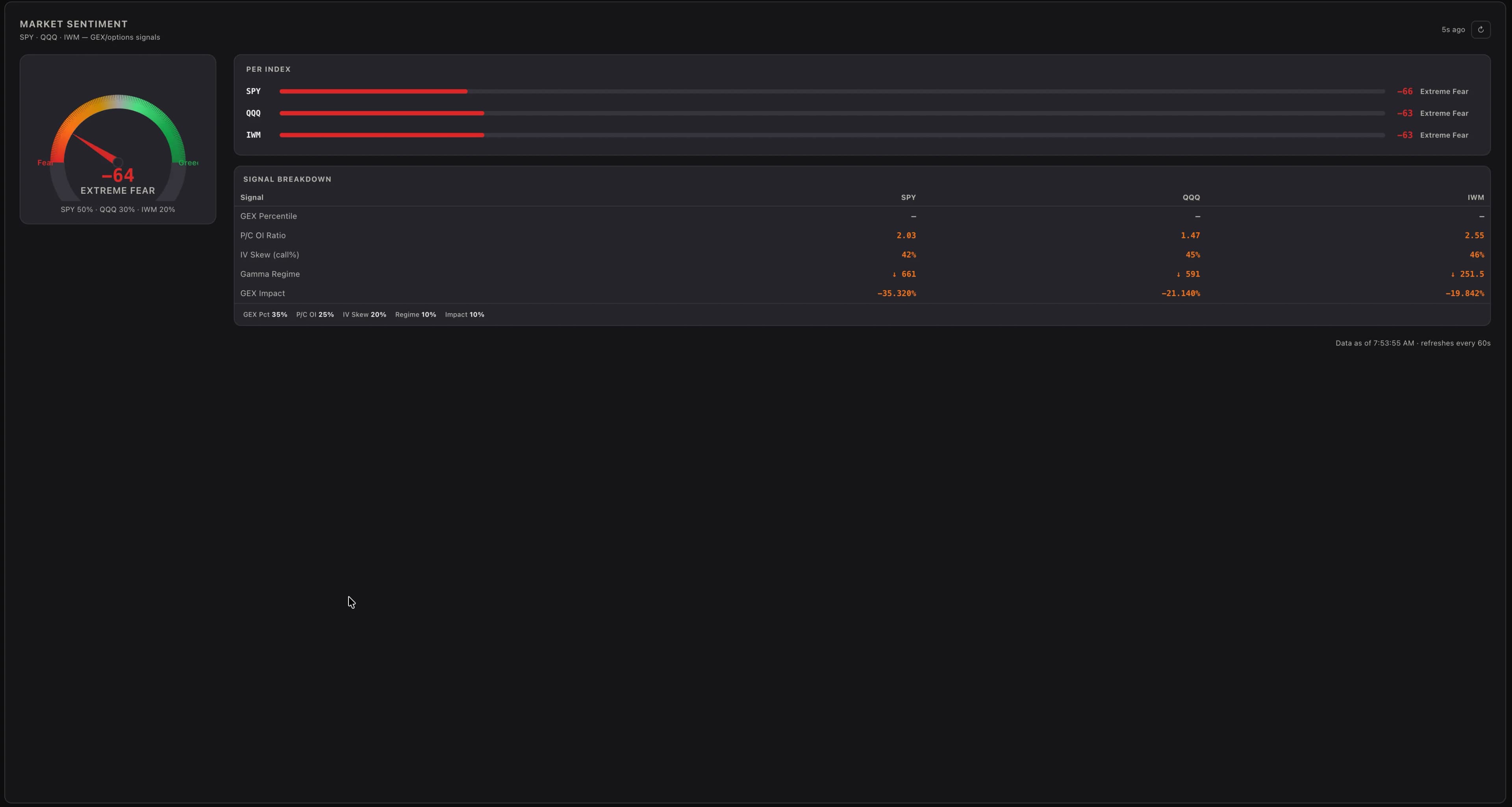
Read sentiment instead of guessing the mood#
Headlines tell you what happened; they rarely tell you how positioned and how fearful the market already is. A composite sentiment read condenses signals like breadth, volatility and options flow into a single dial, so you can see whether the crowd is leaning greedy or fearful before you react to a down day.
Market sentiment — illustrative
Extreme readings cut both ways. Deep bearishness can mark exhaustion as easily as it confirms weakness, which is why sentiment is context to weigh — not a standalone signal. GammaBaba’s Sentiment view tracks this composite through the session; the Sentiment docs explain exactly what feeds it.
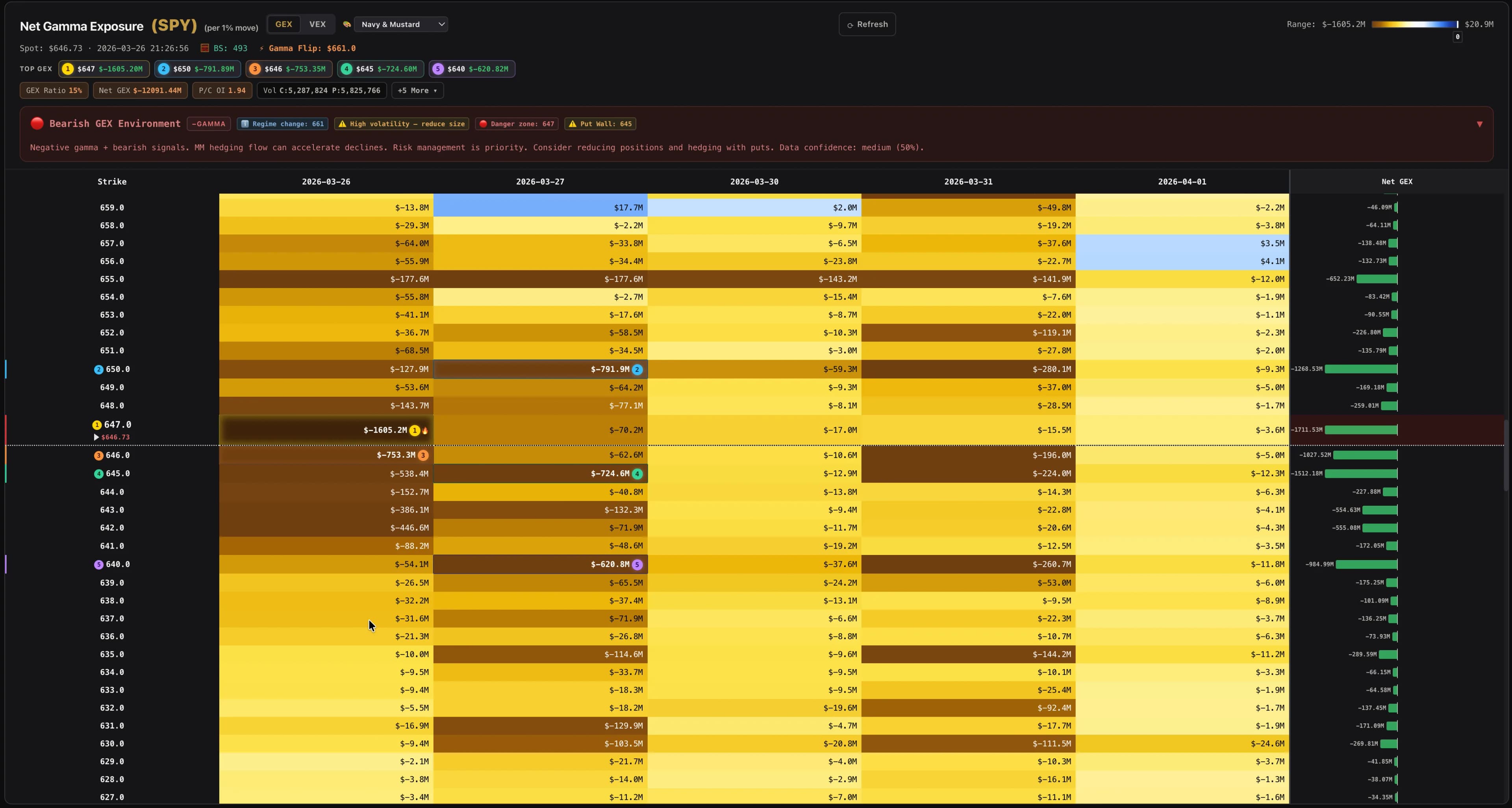
Why selloffs accelerate: negative dealer gamma#
Some down days fall faster than the news seems to justify. A big reason is dealer gamma. Options market makers hedge their books by trading the underlying, and the sign of their net gamma decides whether that hedging calms or amplifies a move.
The mirror image holds on the way up: in positive gamma, dealer hedging dampens moves and the tape feels pinned and range-bound. To go deeper, see SPX GEX Explained and Total Gamma Exposure, or the GEX patterns docs for the setups to watch.
What to do when stocks are going down#
Once you’ve named the driver and sized the move, behavior matters more than headlines. Panic selling versus a disciplined plan rarely favors the panicker. A simple checklist keeps you in control:
- Confirm the driver and the size. Is this a routine dip, or a regime change? The drivers table above is your starting point.
- Check positioning, not just price. Read sentiment and the gamma flip to judge whether the move is stretched or has room to run.
- Revisit your original plan before acting on a single red day — time in the market generally beats trying to time it.
- Mind liquidity windows. The open, the close and expiration days exaggerate moves; don’t mistake a liquidity air pocket for new information.
Frequently asked questions
Why is the stock market down today?
On any given day the stock market is usually down for one of five reasons: a macro shock such as higher interest rates or hot inflation, disappointing earnings, geopolitical events, crowded positioning unwinding, or thin liquidity that magnifies order flow. The market constantly re-prices expectations about future profits, so when those expectations fall, prices fall with them. Identifying which driver is in control is the first step to interpreting the move.
Why did the stock market fall today after calm conditions?
A selloff on an otherwise quiet day often points to the macro channel — an unexpected inflation reading or a hawkish signal from the Federal Reserve. Higher rates discount future profits more heavily and make bonds more competitive with stocks, so equities can decline even without dramatic headlines. Positioning can add to it: once a move starts, crowded trades and dealer hedging can push price further than the news alone would suggest.
Why are stocks going down even when the economy seems fine?
Stock prices reflect expectations about the future, not just current conditions. Markets can fall on the prospect of higher rates, slower future growth, or rising risk, well before any of that shows up in the economy. A down day is frequently the market recalculating those expectations rather than a sign the economy is already weakening.
Is the stock market today in a dip, correction, or crash?
Rough thresholds, measured from a recent peak, help size the move: a decline up to about 5% is a routine dip, a drop of 10% or more is a correction, and 20% or more is a bear market. Corrections are common and historically tend to recover over months, while bear markets are rarer and longer. The label tells you the severity but not the cause, which still needs separate diagnosis.
Why is the market down more in tech than in other sectors?
High-growth and tech stocks usually fall hardest in a selloff because their valuations lean most on distant future growth. When investors discount the future more steeply or turn defensive, those names re-price the most, while steadier sectors like utilities and consumer staples tend to hold up better. This sector rotation is visible on a market-wide heatmap.
How does dealer gamma make a selloff worse?
Options dealers hedge by trading the underlying, and in a negative-gamma regime they must sell into weakness and buy into strength to stay hedged. That pushes price in the direction it is already moving. When a selloff breaks below the gamma flip — where net dealer gamma turns negative — hedging shifts from stabilizing to amplifying, which is why declines often accelerate into air pockets.