Support and Resistance Levels: A Complete Trading Guide
Support and resistance are the price levels where a move tends to stall, pause or reverse. They are the bedrock of technical analysis because they map something real: the collective conviction of buyers and sellers. This guide covers what a resistance level on a stock is, how to find support and resistance levels reliably, a practical support and resistance trading strategy, and the angle most charting tutorials miss — how option gamma walls create their own support and resistance.
Resistance vs support: the core mechanics#
Think of a support level as a floor. As price falls toward it, buying interest grows strong enough to absorb the selling, and the decline stalls. A resistance level on a stock is the opposite — a ceiling, where sellers overwhelm buyers and the advance pauses or turns back. Comparing resistance vs support is really just comparing the conviction of buyers defending a low against sellers defending a high.
A common beginner mistake is treating these as exact, to-the-penny prices. In practice they are zones. Price memory is fuzzy, large orders sit in clusters, and a level that held at $96.20 last month may hold at $95.80 today. Draw a band around the turning points rather than a single razor-thin line — supply zones mark heavy selling pressure, demand zones mark deep pools of buyer interest.
Support and resistance as a trading range — illustrative
How to find support and resistance levels#
The most reliable method for how to find support and resistance is also the simplest: look left. Find the places where price previously reversed with momentum and mark those as zones. A handful of complementary methods sharpen the picture:
| Method | What it identifies | Type |
|---|---|---|
| Swing highs / lows | Past price rejection points where the move turned with momentum — the most reliable read. | Static |
| Round numbers | Psychological levels ($50, $100, $1,000) where humans cluster orders. | Static |
| Moving averages | A sloping floor or ceiling in a trend (e.g. the 50- or 200-day) that follows price. | Dynamic |
| Trendlines | Angled boundaries drawn through higher lows or lower highs. | Dynamic |
| Volume profile | High-volume nodes where heavy trading occurred and price tends to stick. | Static |
| Gamma walls | Strikes with concentrated option open interest where dealer hedging defends a level. | Dynamic |
Notice the static vs dynamic split. Static levels — swing points, round numbers, volume nodes — sit at a fixed price regardless of time. Dynamic levels — moving averages, trendlines and gamma walls — shift as price and positioning evolve, so you re-read them rather than trusting yesterday’s number. For a full walkthrough of price structure, candlesticks and timeframes, see How to Read Stock Charts.
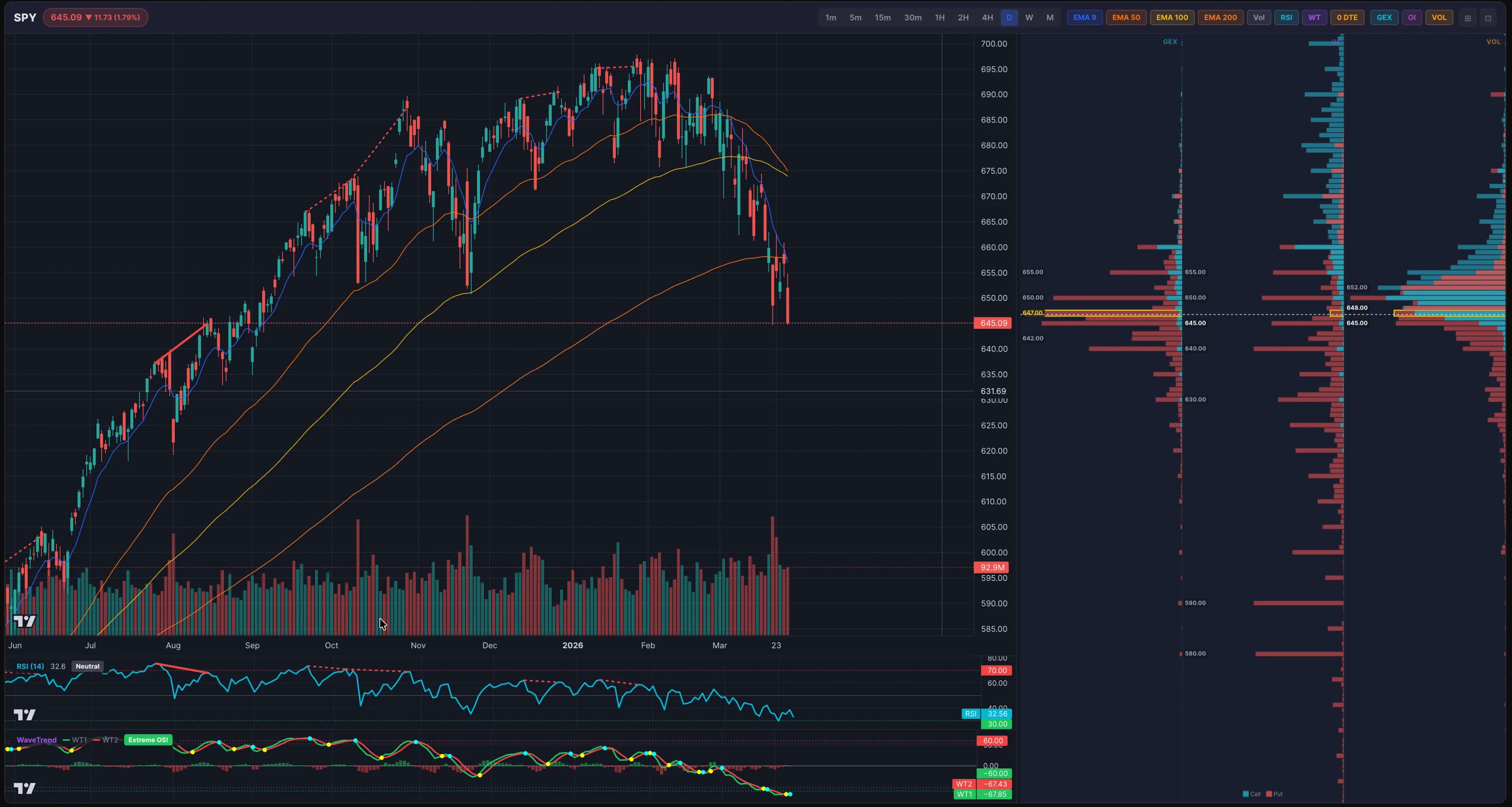
The gamma-wall angle: support and resistance from options#
Here is the part most support-and-resistance guides skip. In heavily traded names, a large share of price-defending order flow is not discretionary at all — it is mechanical hedging by options dealers. Dealers stay delta-neutral, so as price approaches a strike with huge open interest they buy and sell the underlying to rebalance. When dealers are long gamma, that hedging leans against the move: they sell into strength and buy into weakness, which pins price and turns big strikes into support and resistance.
The largest stack of positive gamma above spot — the call wall — tends to act as resistance, because dealer hedging sells into rallies toward it. The largest stack below spot — the put wall — tends to act as support. These walls are genuine levels you will not find by drawing lines on the price chart alone.
Gamma walls as support and resistance — illustrative
To go deeper on the mechanics — why dealer hedging dampens moves above the gamma flip and amplifies them below it — read Total Gamma Exposure and SPX GEX Explained, or the docs guide on GEX patterns.
A support and resistance trading strategy#
A robust support and resistance trading strategy applies across equities, forex and crypto. The common thread is patience: let the level prove itself before you act. Four building blocks cover most setups.
- The classic bounce. Buy near confirmed support or sell near resistance — but wait for price-action confirmation (a rejection wick or a bullish reversal candle at support) rather than trading the level blindly.
- Role reversal. When price decisively breaks resistance, that old ceiling often becomes the new floor, because traders who missed the breakout buy the pullback. Broken support flips to resistance the same way.
- Breakouts and retests. Do not chase a fresh break of a level. Wait for a retest of the broken zone to filter out bull and bear traps — let the market confirm the breakout is genuine.
- Volume validation. A break on heavy volume signals real conviction; a break on thin volume is often a fakeout that snaps back into the range.
Refining entries: pivots, Fibonacci and multiple timeframes#
Once the core zones are mapped, a few overlays tighten your entries. Pivot points give day traders an algorithmically calculated set of intraday support and resistance targets around the prior session’s range. Fibonacci retracements help locate hidden support inside a pullback. And multi-timeframe analysis — finding a level on the daily chart, then timing the entry on a 15-minute chart — raises the quality of each trade without adding clutter to a single view.
Why support and resistance levels fail#
No level holds forever. A boundary breaks when a fresh catalyst or a wave of institutional volume shifts the balance of power. Picture the zone as a door: every test of the level absorbs some of the resting orders that defend it. Once those orders are depleted, the next push goes through. That is why a level that rejected price three times can snap on the fourth — and why the gamma-wall view is useful, since walls thin out and migrate as option positioning changes. Plan the invalidation before you enter, not after.
Map support and resistance on GammaBaba#
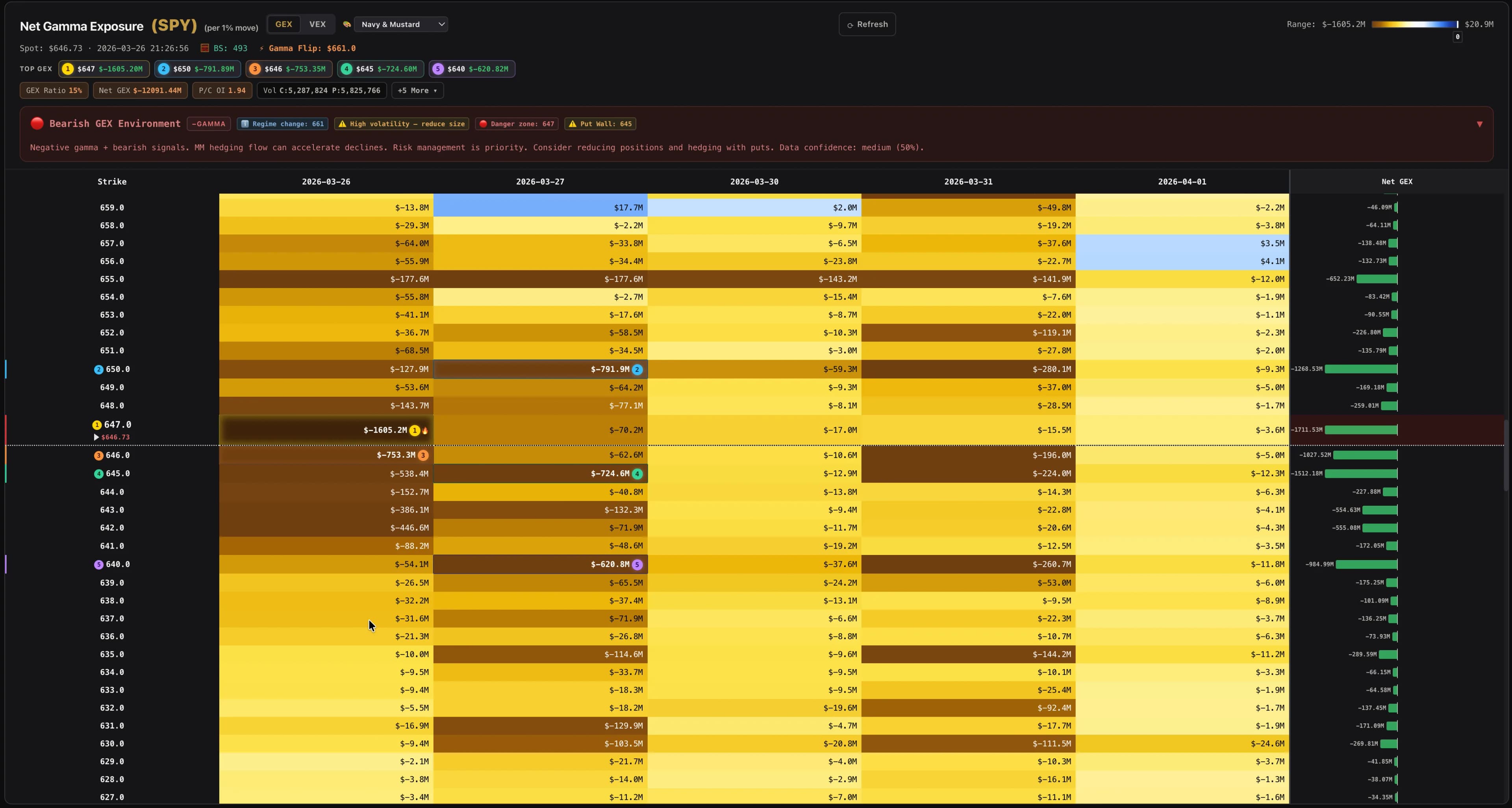
GammaBaba combines the classic price view with the options layer most charts ignore. Open Chart View to mark swing highs, lows and trendlines, then overlay the call and put walls and the gamma flip so you can see exactly where dealer hedging is likely to defend a level. The GEX heatmap shows the same wall structure across strikes and expirations for SPX, SPY or any optionable ticker.
Frequently asked questions
What is support and resistance in trading?
Support is a price level where falling prices tend to stall because buying interest absorbs the selling. Resistance is a level where rising prices tend to stall because selling pressure overwhelms buyers. Together they mark the zones where a move is most likely to pause or reverse, and they form the foundation of technical analysis.
How do I find support and resistance levels on a chart?
Start by looking left for swing highs and swing lows where price previously reversed with momentum, and draw a zone around each cluster rather than a single line. Then add round numbers, moving averages, trendlines and volume nodes. In optionable names, large option strikes (gamma walls) act as additional support and resistance.
What is the difference between resistance vs support?
They are mirror images. Support sits below the current price and represents buyer demand defending a low. Resistance sits above and represents seller supply defending a high. When price decisively breaks one, it often reverses role — old resistance becomes new support, and broken support becomes new resistance.
How do option gamma walls act as support and resistance?
Options dealers hedge by trading the underlying to stay delta-neutral. Near strikes with large open interest, that hedging clusters: a call wall above the price tends to cap rallies like resistance, and a put wall below tends to cushion declines like support. These walls migrate as positioning changes, so they are dynamic levels you re-read through the session.
Why do support and resistance levels fail?
A level holds only while there are enough resting orders to defend it. Each test absorbs some of those orders, and a fresh catalyst or a surge of institutional volume can deplete them quickly. Once the orders are gone, price breaks through. That is why no level holds forever and why volume confirmation matters on a breakout.
What is the best support and resistance trading strategy?
A disciplined plan combines a few setups: buy bounces at confirmed support and sell at resistance with price-action confirmation, trade role reversals after a clean break, wait for a retest before trusting a breakout, and require volume to validate the move. Trade levels where several signals line up, and always define your invalidation in advance.