🚀 Gamma Squeeze Explained
A gamma squeeze is a self-reinforcing upward price move driven by dealer hedging of short call positions. It is distinct from a short squeeze (which targets short stock positions), though the two often happen in tandem. The same mechanic that fuels the rally can reverse just as fast once the call buying fades — which is why reading the gamma structure beforehand matters.
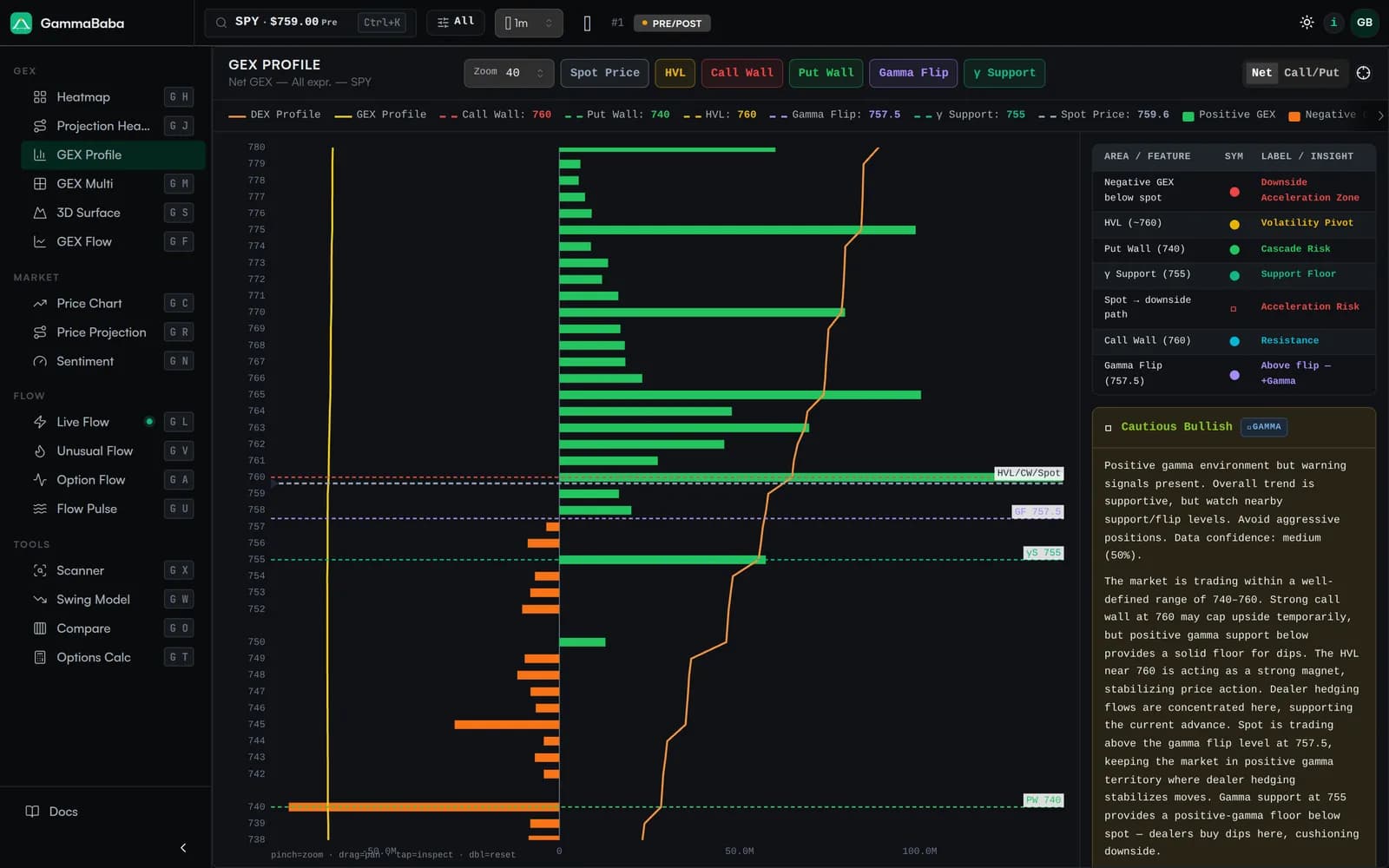
GammaBaba surfaces the conditions that precede a squeeze: stacked call walls above spot, the gamma flip level, and the regime the underlying is trading in. The GEX Profile below distills net gamma by strike into a plain-English summary so you can size up the setup at a glance.
The mechanics#
When traders aggressively buy out-of-the-money calls, market makers sell them and become short gamma, short delta. To stay delta-neutral as price rises, dealers must buy the underlying. That buying pushes price higher, which increases the delta of the calls (because gamma is highest near the strike), forcing dealers to buy even more stock. The loop accelerates as more calls move ITM.
Historical examples#
- GME (Jan 2021) — massive OTM call buying against a heavily shorted stock produced the most-cited gamma+short-squeeze combo in modern markets.
- TSLA (late 2020) — quarterly inclusion-driven call buying built a dense call-wall stack that dealers hedged into.
- NVDA (mid-2024) — repeated earnings-cycle gamma buildups around AI narrative peaks.
How to spot the setup on GammaBaba#
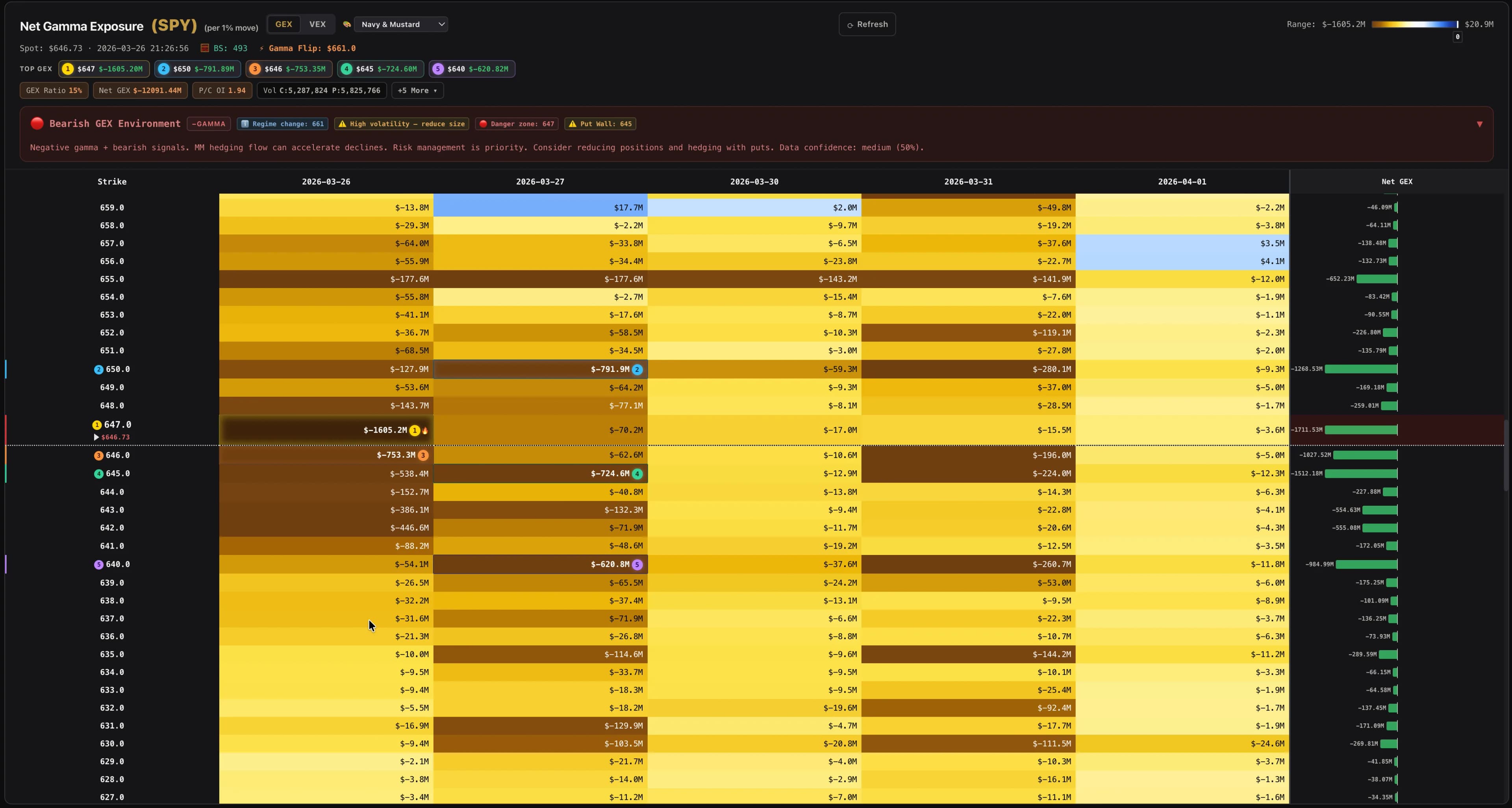
- Open the GEX heatmap and look for stacked call walls above spot — multiple strikes with heavy positive GEX in the nearest expirations.
- Check the Live Flow for unusually large OTM call premium relative to recent baseline.
- Compare to Sentiment — a call premium skew that keeps expanding while price climbs is a confirmation.
- Watch the GEX Flow panel: rapid intraday growth in net call gamma at strikes above spot is the classic fingerprint.